Martin Cockcroft – the gift of blood

For more than 30 years, Martin Cockcroft, Technical Operations Manager in the School of Biology, made a habit of donating blood three times a year. It was a modest, generous routine that he never imagined would one day save his own life.
In June last year, while cleaning his car at home in Dundee, Martin was struck by a sudden, intense pain in his abdomen. Within minutes, the pain escalated, and Martin was rushed to Ninewells Hospital, where he was diagnosed with a ruptured mesenteric artery aneurysm — a rare and life-threatening emergency.
“I was extremely lucky to be alive,” says Martin. “The doctors told me that if I’d arrived at A&E just a few minutes later, it might have been too late.”
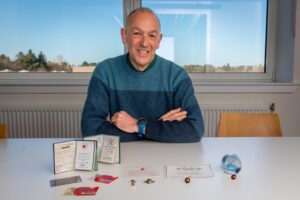
Martin underwent emergency surgery, during which he received between nine and twelve units of blood to replace what he had lost. “I probably depleted their stocks that afternoon,” he jokes. But he knows just how serious it was — and how vital those blood donations were in saving his life.
After a short stay in intensive care and a period of recovery, Martin was keen to return to work. He credits the University’s support for both him and his family during this time as a huge source of comfort and reassurance.
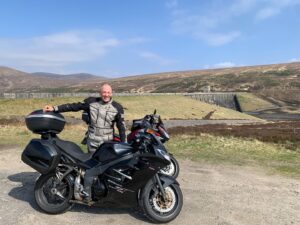
While Martin discovered he could no longer donate blood following his transfusions, he was disappointed and knew there must be another way that he can help. A keen motorcyclist and a member of the Army Reserve’s multi-role medical regiment, Martin is now training with the Institute of Advanced Motorists with the goal of joining Blood Bikes Scotland — a charity providing free, urgent transport for blood, samples and medical supplies for NHS Scotland.
“I was disappointed not to be able to donate anymore, but this is another way I can give back. If it weren’t for people donating blood, lives like mine wouldn’t be saved.”
You’ve been a regular blood donor for over three decades — what first inspired you to start giving blood, and why was it important for you to keep going?
I started donating because my only experience of needles was school innoculations… who’s old enough to remember the Heaf test which left you with an arm full of holes?
I thought that giving blood may be a good way to get used to having ‘jags’, so I went along to give it a try. It turned out that having one jab was nothing like as scary as having six in one go, plus you got a free cup of tea or juice and a chocolate biscuit, which as a first-year student made it all worth signing up for. Seeing the stories of people whose lives had been transformed or saved through donations, I realised that you could make a massive difference to someone through a relatively small act.
You’ve spoken very warmly about the support you received from the University community during your recovery — what did that support mean to you and your family at such a difficult time?
The support from individuals and groups across the University was brilliant. My family and I really appreciated knowing that there was so much support and encouragement, and that we could concentrate on recovery without needing to think about work for a while.
How would you describe working at St Andrews, both in terms of your day-to-day role and the culture of care you experienced during your illness?
Working at St Andrews certainly brings variety! As the School of Biology Technical Operations Manager, I spend my time between the School’s three buildings, each of which brings its own unique challenges to be addressed to maintain and improve technician support to teaching and research. The culture here has been very supportive ever since I started here just over two years ago, and I try to reflect that in my daily dealings with colleagues in my routine work.
Now that you’re no longer able to donate blood, you’re planning to join Blood Bikes Scotland. What motivates you to stay involved with blood donation services, and what would you say to colleagues considering giving blood for the first time?
I am first-hand evidence that blood donors save lives. I very much miss the camaraderie and sense of shared purpose you get at a donor session, so I’m hoping that the Blood Bikes community will be able to carry that forward. For those who can donate, you really don’t know what’s waiting for you just around the corner, so by setting aside about an hour every three or four months, you can make a life of death difference to someone. That cup of tea and biscuit makes it all worth it!
Information about how and where to give blood is available at www.scotblood.co.uk.
Discover more from Staff news
Subscribe to get the latest posts sent to your email.